Why Having "Unlimited Users" Matters
Imagine you load up your family to head to the beach (or the mall, or the mountain, or Disneyland - wherever you take your family for fun).
You finish loading the last bag, and call out, “Alright - let’s load up!”
Your spouse gets in and buckles; you hear a click behind you as your daughter gets into her spot.
Your son sits in his seat.
He grabs his seat belt and attempts to fasten it.
But the receiver is locked.
“Dad, did you forget to upgrade my seat?”
You now have two choices: pay the cash to “upgrade” the family car you purchased awhile back so that your whole crew can get started on your journey, or leave your son at home and listen to side comments for the rest of the trip.
(Some of you may even “squeeze” your passengers into sharing that seat with a buckle.)
That predicament is what it can feel like for many organizations who are trying to get somewhere with their new software, but are left handcuffed by user permissions and seat limitations.
Don’t Get Locked Out of Your Own Initiatives
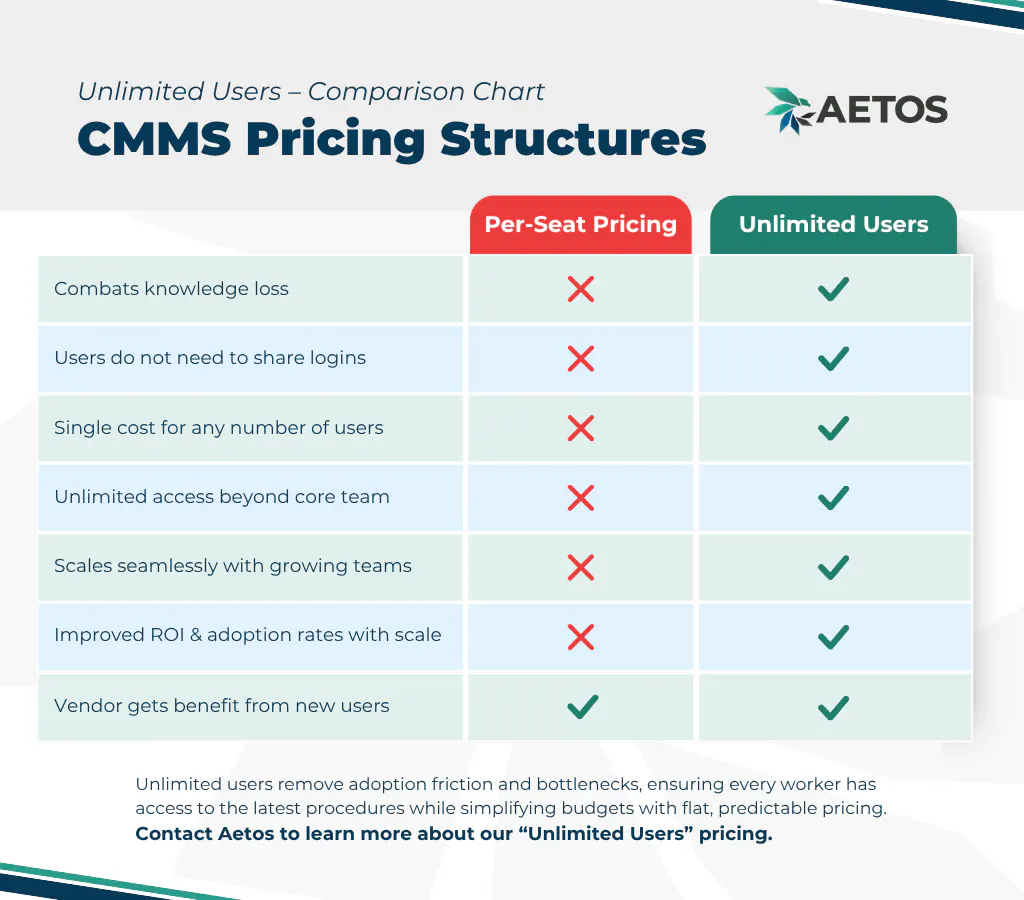
Similar to how you want your family to load up and head out without seat belt restrictions, software that fails to offer unlimited users significantly increases adoption friction and decelerates collaboration. Instead, you’re left rationing logins with your team at best.
Traditional per-seat licensing models are built so that every additional technician, contractor, or supervisor carries an incremental cost. The result is a muted but powerful constraint: logins get reserved for a select few.
If you’re hesitant to splash the cash, some of your leaders onsite will get full access, while other operators and technicians doing the work have to “double buckle.” But more often than not, organizations are left with high per-seat pricing that is unavoidable.
It’s a good business model – for software companies.
In fact, per-seat models can actually work against corporate-wide initiatives. Many organizations want every frontline employee to be a connected worker – equipped with the right information, at the right time, in the right context. But when the license model penalizes each new user, the connected worker becomes a pilot project, not a standard.
In complex facilities, that gap shows up as lag, rework, and safety risk.
Real-World Limitations of Per-Seat Licenses
Per-user fees quietly distort behavior. Maintenance software providers that charge by the seat encourage customers to ration logins.
Organizations are left with the same options as you and your family taking that trip: either pay to upgrade, squeeze your team tight, or leave some behind.
Consider a large plant with 150 O&M personnel needing to access a software, but only 10 seats are available.
What do you do?
Those extra 140 seats can feel like you're being nickel-and-dimed by your vendor. But you don’t really have any other option – do you?
If only you could move from per-seat rates to unlimited-user licensing and reduce hidden coordination costs, accelerate work execution, protect margins…
Operational, Financial, and Data Impact of Unlimited Users
Primarily, when it comes to operational impact, compliance and safety should be paramount.
With unlimited users, you are guaranteeing that anyone who is hired inside your organization has all the access and content they need to do their job well.
Every worker involved in a task can see the latest procedure, visual hazard zones, and other operational items without being limited on their visibility. Unlimited users are what make that level of coverage realistic.
Additionally, unlimited users make budgeting simpler and more strategic.
Instead of debating every new hire or contractor against the cost of a new seat, leaders can think in terms of capability: “Does this person need access to do their job safely and efficiently?” If the answer is yes, they’re added. That flat, predictable pricing de-risks expansion, seasonal peaks, and cross-site collaboration.
Financially, the ROI often shows up in fewer delays, faster decisions, and safer, more consistent task execution.
Perhaps one of the most overlooked impacts is on data quality. If only a small group of people can enter or update information, the system becomes stale. Work gets done, but it isn’t fully documented.
Unlimited access encourages technicians and operators to log issues, attach photos, and get involved in the software at a deeper level. Over time, that richer history improves reliability engineering, capital planning, and energy optimization decisions.
Unlimited Users Matters in Modern Industrial O&M
What if that car had enough seats to take everyone in your family – and fit your friends, too? (But in-laws would be a stretch, right?)
When there is no penalty for adding people, the default becomes, “If you need access, you have access.”
There’s a ton of different job types across your organization, and they all need that access to operate in-sync. Field technicians, reliability engineers, safety teams, contractors, and even OEM partners can be brought into the same environment.
Industrial work is collaborative by nature. One of your work orders might involve an operator identifying the issue, a planner scoping the job, a maintenance tech doing the repair, and an engineer verifying the solution. When only one or two of those stakeholders have access to your core O&M platform, the rest are forced to rely on interpretation.
Unlimited users in industrial O&M software means every stakeholder can access the same live, visual system without paying by the seat.
And one more thing to consider here: the cultural effect.
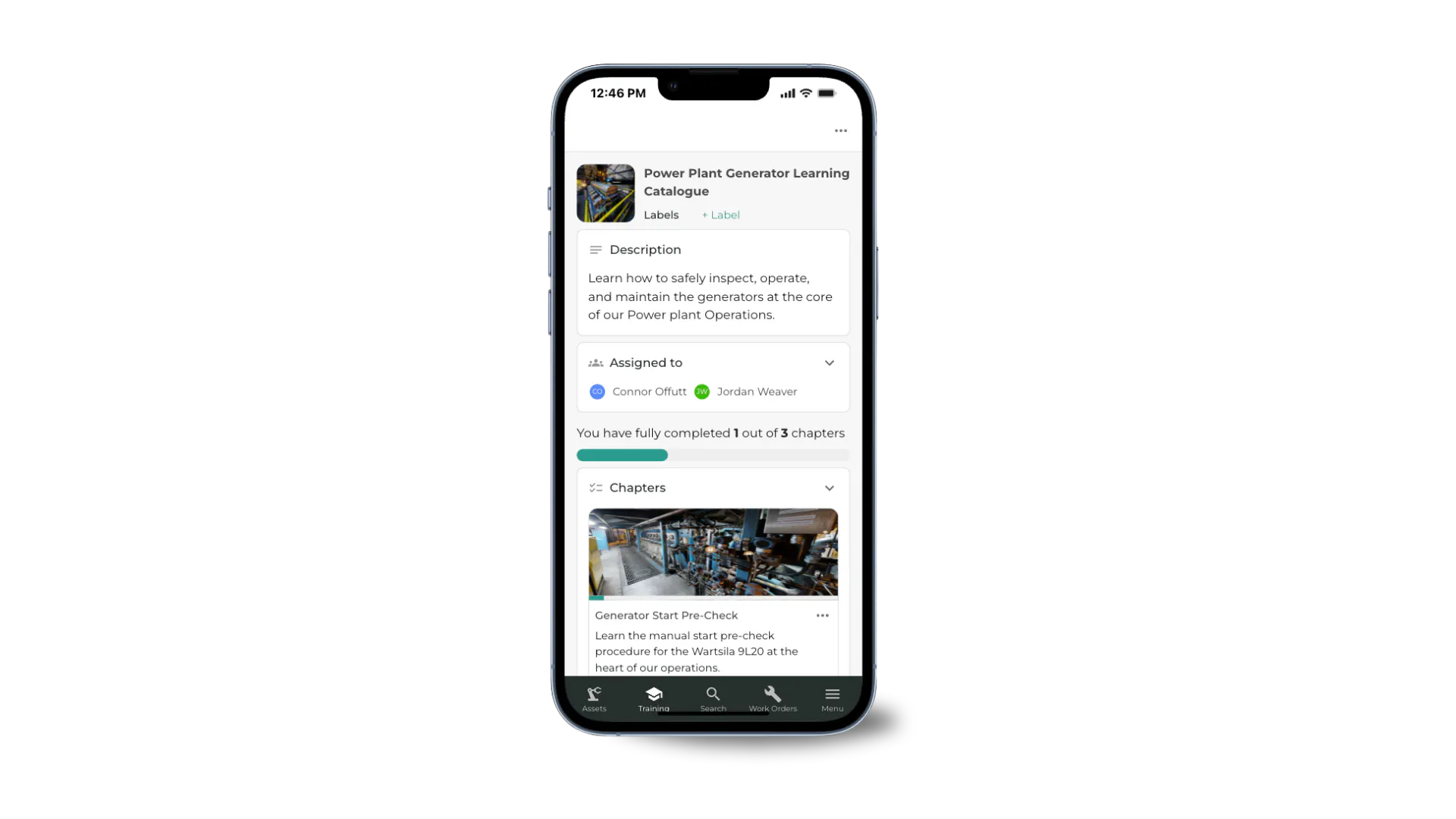
O&M platforms that are restricted feel like someone else’s system. But when every worker can log in, see their world visually, follow guided SOPs, and contribute notes or photos, the system becomes part of the way you work. Shifting from gated software to shared infrastructure is where unlimited-user licensing proves its real value.
Why We Believe in Unlimited Users
We believe you should have enough seats to get to where you want to go. Your organization should not have to choose between taking on more cost or leaving someone behind.
Unlimited users for our clients goes beyond pricing and convenience. It is an intentional choice about how information flows through your organization to your workforce.
We want every worker to be able to tap into a visual, connected operations and maintenance environment.
We want to reduce lag, preserve knowledge, and make it far easier for your teams to operate safely, accurately, confidently, and efficiently.
We want this generation of workers – and the next – to have the best-in-class maintenance experience without having to wait in line, share a login, or interrupt their digital transformation journey.
We want you to stop limiting yourself with software that caps employee participation.
Because we believe that in order to get where your organization needs to go, you shouldn’t be limited by the amount of seats available.
So the next time you load up for your family vacation, we hope the whole clan has a chance to enjoy the ride – and the many adventures that follow.


